This fellowship is implemented by Teach For Uganda under the Leaders in Teaching Program, an initiative of the Mastercard Foundation delivered in a consortium led by Luigi Giussani Foundation and UNICEF.
Eligibility form open
Primary School Fellowship
Help Primary One learners in Buliisa District read their first words and build confidence with numbers. Women and men with a bachelor’s degree in any field can apply.
During pre-service training, practise explaining a concept, planning a lesson and listening to feedback. Try it again with another Fellow and notice what lands differently.
During placement
Find out what your learners can do today.
In Primary One, listen as a child reads and plan the next activity around the sounds they find difficult. In secondary school, ask a girl to test her own prediction and explain what she observed.
In the school community
Build something the school wants to keep.
Listen to families and colleagues, choose a local need together and lead a community project. A reading club, a school garden or a science club can begin with that conversation.
After the Fellowship
Take the question that stayed with you.
Some alumni continue teaching or move into school leadership. Others build education initiatives, work with communities or bring classroom experience into policy and public service.
Vidah met eager readers with too few books. During her placement, she applied to Enjuba Foundation on behalf of Kagadi Model Primary School. The books arrived after her Fellowship ended.
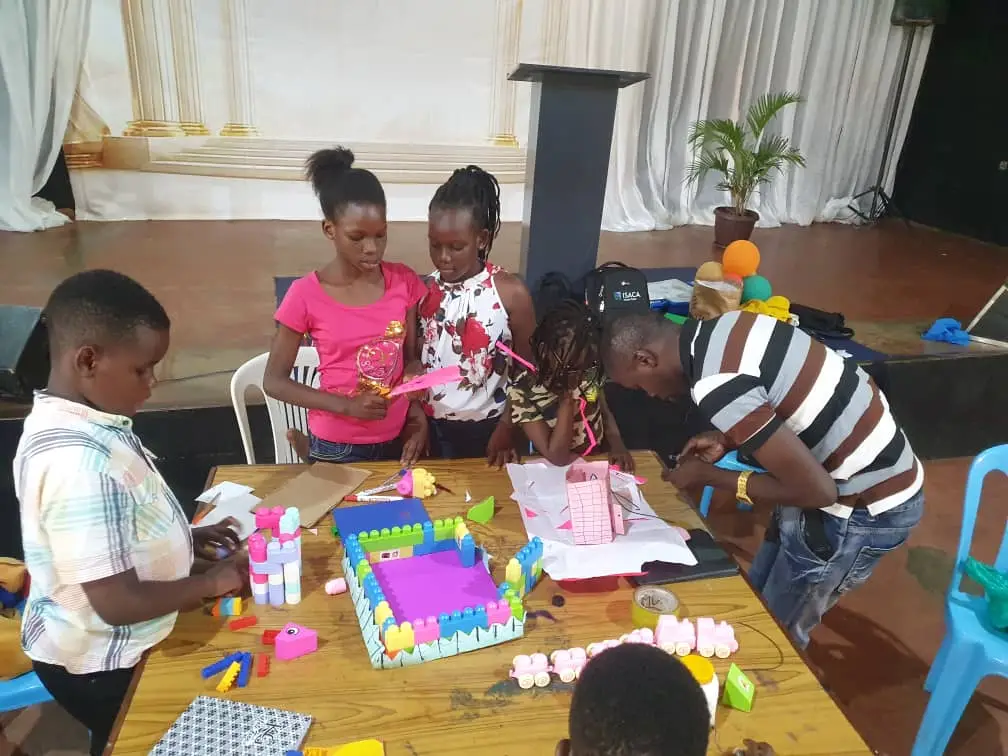
Anthony saw learners studying technology in classrooms where many had never handled a computer. After his placement, he co-founded Robokids Africa. Learners now assemble models, write basic scripts and help classmates troubleshoot their work.
It is a full-time, two-year commitment. Alongside teaching, you plan lessons, assess learning, work with colleagues and families, and lead a community project. Explore the Fellowship journey.
Do I need a teaching degree or previous classroom experience?
No. Fellows receive preparation before placement and coaching while they teach. You need a bachelor’s degree that meets the criteria for your chosen pathway.
What support will I receive?
Fellows receive pre-service training, coaching, peer learning and programme support. Teach For Uganda provides a monthly stipend to help with living expenses.
Can I choose my school or district?
Placements follow school and community needs. This Primary FLN round is for rural UPE schools in Buliisa District. STEM Fellows should be ready to serve in any Universal Secondary Education school. Discuss any placement or access needs with Recruitment.
Which subjects does the STEM round cover?
This targeted round will recruit 50 women Teacher Leaders across Biology, Chemistry and Physics combined. Review the full STEM criteria, including the minimum CGPA of 3.0 and the age range of 22–27. Explore the STEM pathway.
I applied in the earlier STEM round. Should I apply again?
Contact Recruitment about your existing application before completing another form. Include your name and the email address you used to apply.
Is there a fee, and what does the STEM qualification involve?
STEM registration, training and participation are free. STEM Fellows must be willing to undertake a fully funded, one-year Postgraduate Diploma in Education during their first Fellowship year.
Who can apply for the primary Fellowship?
Women and men aged 22–30 who are Ugandan citizens or refugees living in Uganda, with a bachelor’s degree in any field and a CGPA of at least 3.5 out of 5. Applicants should care about early childhood development and girls’ education, be proficient in English and be willing to train and teach Primary One in a rural UPE school in Buliisa District.
Can a man with a science degree apply?
Yes, for primary FLN if you meet its requirements and want to teach Primary One. The targeted secondary STEM round is for women graduates.
What do I need for the FLN eligibility form?
Allow 10–15 minutes and have your CV ready as a PDF of up to 300 KB. Apply by . The eligibility check is the first of two application stages. Explore the FLN applicant guide.
How long is the initial FLN training?
The eligibility form asks if you can attend five weeks of training, including three in person and two online.
What happens after the two years?
You join Teach For Uganda’s alumni community. Alumni apply their experience in schools, community initiatives, social enterprises and public service. Explore Vidah’s and Anthony’s stories.
In the Foundational Literacy and Numeracy (FLN) pathway, you’ll teach reading, writing and early maths in a rural primary school. You’ll learn to notice the small things that tell you a child is ready for the next step.
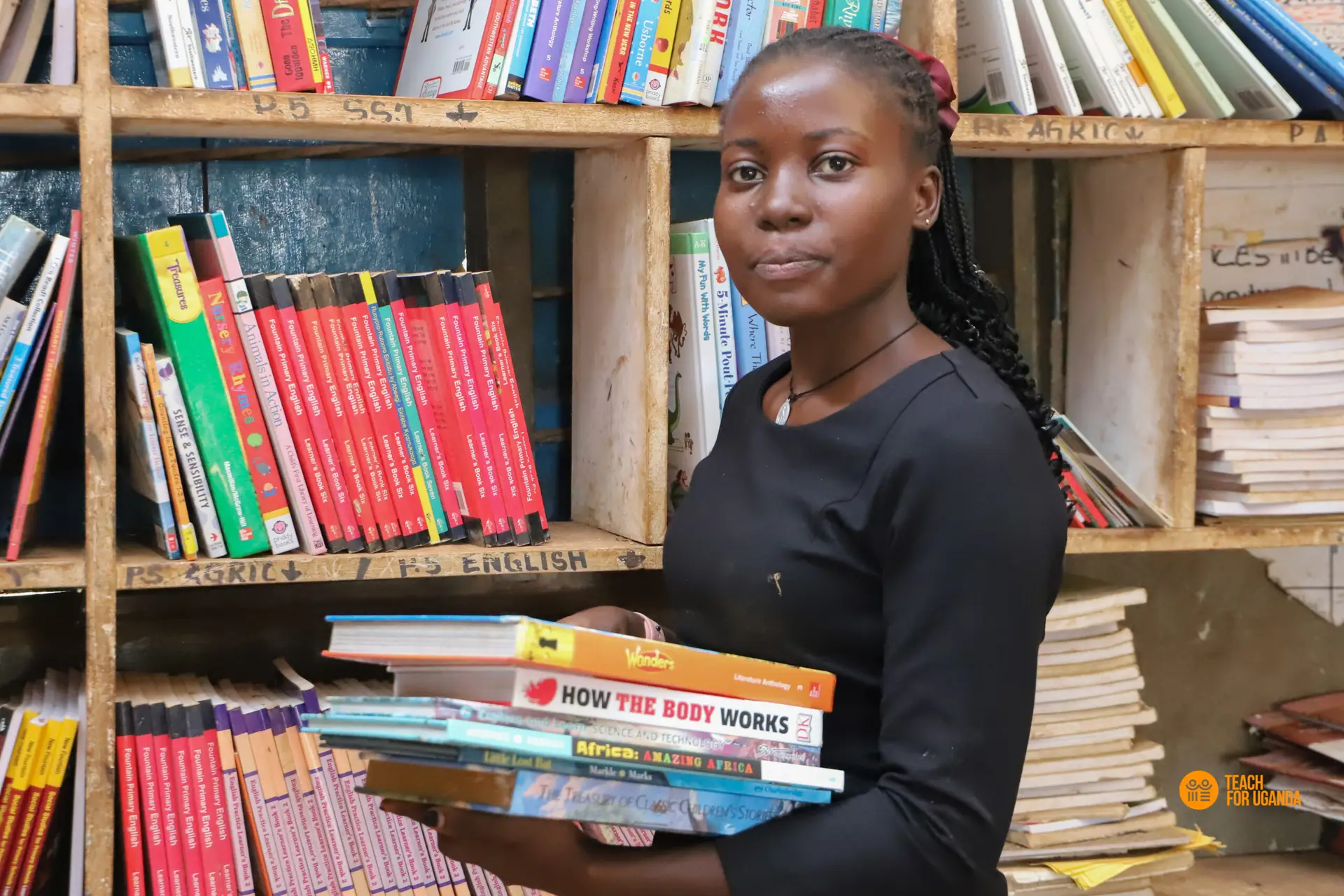
Reading together in a Teach For Uganda partner school.
1 of 3 / The classroom
The class reads aloud. Who can read alone?
Imagine your Primary One class reading a sentence together. One girl joins in confidently. When you give her the same words in a different order, she pauses. You have a few minutes with her. What would you try?
Choose an approach to explore
Ask her to find one word she knows
You learn which words she recognises on her own. Point to the first letter of a new word, sound it out together, then give her a turn. Her response helps you plan tomorrow’s lesson.
Read the new sentence with her
Hearing the sentence can help her try again. Afterwards, point to one word and let her read it on her own. That small check helps you hear what she can already do.
A practice moment. Your choices are private and unscored.
What fills your school week?
With learners
Listen to children read, practise letter sounds and use familiar objects to count. Adjust the next activity when a learner needs another way in.
With your coach
Bring an example of a child’s work. Talk through what helped and try one change in your next lesson.
With families
Find out what children enjoy reading at home. Work with colleagues and caregivers on a reading activity the school can keep going.
You are a woman or man who is a Ugandan citizen or a refugee living in Uganda.
You hold a bachelor’s degree in any field with a CGPA of at least 3.5 out of 5.
You are 22 to 30 years old when you apply.
You care about early childhood development and girls’ education at primary level.
You are proficient in spoken and written English and are willing to train and teach Primary One in a rural Universal Primary Education (UPE) school in Buliisa District.
Eligibility form open
Ready for the FLN eligibility form?
This is the first of two application stages. Set aside 10–15 minutes and have your CV ready as a PDF of up to 300 KB.
The girl I am. The change I lead. Teach For Uganda’s STEM Fellowship campaign.
1 of 3 / The classroom
One bulb. One group. Who gets to try?
Imagine a physics lesson. A group has connected a cell, wires and a bulb, but the bulb stays dark. One learner does all the handling. A girl beside him says she thinks she can see the gap. What would you do next?
Choose an approach to explore
Invite her to test her idea
Give her time with the circuit. Ask what she changed and what happened. Hearing her explanation tells you more about her understanding than seeing the bulb light up.
Ask everyone to sketch the circuit
A sketch gives each learner a way to show their thinking. Invite the girl to compare her drawing with the circuit, then put the materials in her hands so she can test her idea.
A practice moment. Your choices are private and unscored.
What fills your school week?
With learners
Plan a practical in your subject. Give learners time to predict, observe and explain, including those who rarely volunteer.
With your coach
Discuss who handled the materials and whose voices you heard. Plan how a different learner could lead the next practical.
With colleagues
Ask girls what would make practical science easier to take part in. Work with another teacher on an idea the school could sustain.
You are a woman who is a Ugandan citizen or a refugee living in Uganda.
You are 22 to 27 years old when you apply and hold a bachelor’s degree in a STEM field with a CGPA of at least 3.0.
You are ready to teach Biology, Chemistry or Physics. These are the three subjects for this round.
You are proficient in English and can commit to two years full-time, with placement in any Universal Secondary Education (USE) school.
You care about education equity and want to lead change with learners and communities.
You are willing to undertake a fully funded, one-year Postgraduate Diploma in Education during your first Fellowship year.
Women with disabilities are encouraged to apply.
Applications open
Ready for the STEM eligibility form?
Apply by . Set aside 10–15 minutes for the eligibility check and have your CV ready as a PDF of up to 300 KB.
If you applied in an earlier round, ask Recruitment about your existing application before starting another.
This fellowship is implemented by Teach For Uganda under the Leaders in Teaching Program, an initiative of the Mastercard Foundation delivered in a consortium led by Luigi Giussani Foundation and UNICEF.