

Programs
- Home
- Programs
Programs that strengthen learning, leadership, and possibility
Teach For Uganda’s programs are grounded in a simple belief: children need more than access to school. They need strong foundations, capable teachers, supportive communities, and opportunities to imagine a wider future.
Across its work, Teach For Uganda combines classroom support, leadership development, innovation, and community engagement to help learners thrive.
Across its work, Teach For Uganda combines classroom support, leadership development, innovation, and community engagement to help learners thrive.
What we do - TFU
Our Programs
Foundational Literacy and Numeracy
Before any child can fully step into opportunity, they need a strong foundation.
Teach For Uganda’s foundational learning work focuses on building literacy and numeracy in the early grades through structured lesson delivery, continuous assessment, and play-based approaches that help learning become visible and joyful.
Program assessments show literacy proficiency improving from 5% to 15%, and numeracy from 7% to 17%. TaRL results also show strong gains in basic arithmetic among lower-primary learners.
Climate Education and Environmental Leadership
Teach For Uganda’s climate work helps learners engage with environmental stewardship as both a present responsibility and a future necessity.
In 2024, the Climate Education project reached 21,899 learners across 82 schools. Beyond the numbers, learners have participated in environmental clubs, climate education projects, tree planting, school gardens, and community clean-up efforts. Across participating schools, Fellows and learners have mobilized 50,000 tree seedlings and led action grounded in local realities.
Digital Learning
Teach For Uganda’s digital learning initiatives help bridge the technology gap in underserved schools.
Through partnerships and targeted support, schools have accessed tablets loaded with interactive content, teacher training on digital pedagogy, and blended learning models that open new pathways for engagement.
In 2024, the Digital Learning project reached 11,269 learners across 61 schools, giving many learners their first experience of technology as a tool for learning.
Financial Literacy
Teach For Uganda’s financial literacy work helps learners, especially girls, develop the confidence and practical skills to make informed decisions about their futures.
In 2024, the Financial Literacy initiative reached 7,975 learners across more than 33 schools. The program supports knowledge in savings, budgeting, entrepreneurship, and personal agency, helping learners imagine broader possibilities for themselves.
Community Engagement and Innovation
Teach For Uganda Fellows are not only teachers. They are also catalysts for community mobilization.
To date, Fellows have conducted 12,255 home visits and led 222 community impact projects. These projects have included reading clubs, school gardens, health drives, climate action campaigns, and other locally grounded responses shaped with communities rather than delivered to them.
Leaders in Teaching (LiT)
The Teach For Uganda STEM Fellowship is a 2-year leadership development program for young women in STEM who are ready to make a difference.
It is an opportunity to take what you have learned and apply it where it matters most: within classrooms, communities, and the future of education in Uganda.
As a Fellow, you will teach in secondary schools, support student learning, and grow your leadership through real, hands-on experience.
This is not just a placement.
It is a commitment to lead, serve, and shape what comes next.
Get Inspired Get Involved
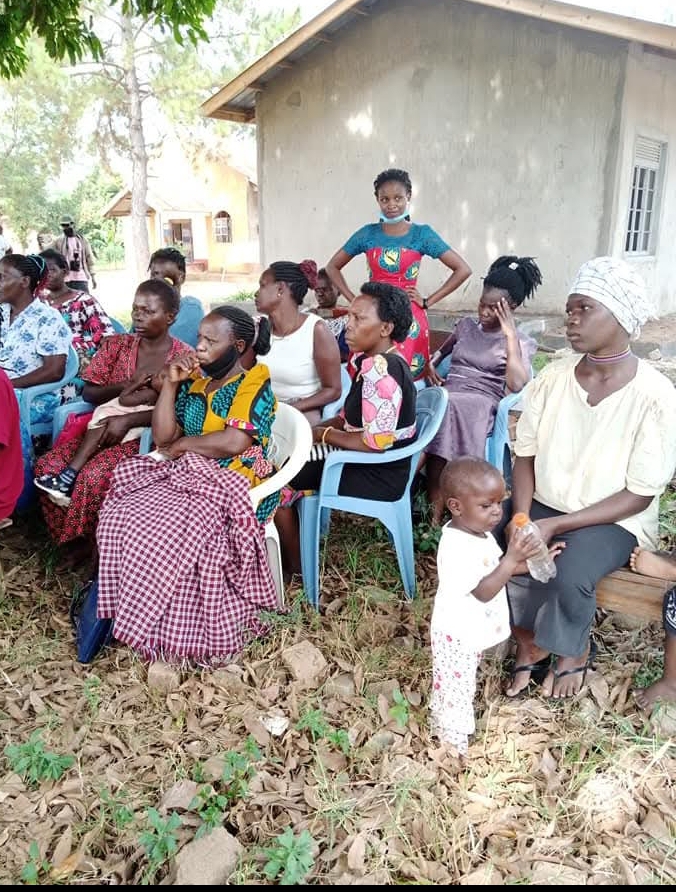

What Home Visits Look Like
Home visits are a key part of Teach For Uganda’s holistic approach.
During these visits, Fellows engage directly with a child’s home environment by meeting the child's parents or guardians, siblings, and other household members. Visits may be prompted by declining academic performance, absenteeism, behavioral change, lack of basic scholastic materials, signs of neglect or abuse, school feeding concerns, or barriers affecting girls’ retention and participation.
The purpose is not simply to observe. It is to understand more deeply what may be affecting a child’s learning and to work collaboratively with families and communities to identify support pathways.
During these visits, Fellows engage directly with a child’s home environment by meeting the child's parents or guardians, siblings, and other household members. Visits may be prompted by declining academic performance, absenteeism, behavioral change, lack of basic scholastic materials, signs of neglect or abuse, school feeding concerns, or barriers affecting girls’ retention and participation.
The purpose is not simply to observe. It is to understand more deeply what may be affecting a child’s learning and to work collaboratively with families and communities to identify support pathways.