
Alumni Impact: From Fellowship to Future-Ready Classrooms
Alumni Impact: From Fellowship to Future-Ready Classrooms
What happens after the Fellowship?
Have you ever wondered what happens after the Teach For Uganda Fellowship?
For Ochieng Anthony, the answer is taking shape in classrooms where learners are not just talking about the future, but learning how to build it.
Anthony, a Teach For Uganda Alumnus and Co-Founder of Robokids Africa, is helping learners in underserved communities access robotics, coding, and practical STEM learning. His journey began in Mayuge, where he served as a Fellow and saw a gap that stayed with him: bright learners were studying technology in theory, but many had never touched a computer, written code, or used digital tools to create something of their own.
The case study, “Coding the Future: Bridging Opportunity Gaps Through Robotics and Coding in Uganda,” captures the heart of this challenge clearly: education should do more than prepare learners to pass exams. It should prepare them to thrive in a world that is increasingly shaped by technology.
In many underserved classrooms, however, access to future-ready skills remains limited. The case study points to three barriers that continue to hold learners back: little or no access to computers and digital tools, ICT taught mainly through textbooks and blackboards, and teachers who often lack the training and confidence to deliver practical technology lessons.
Anthony saw these realities up close during his Fellowship placement in Mayuge. Classrooms were crowded, resources were stretched, and reliable electricity was not always available. Yet the learners he met were curious, capable, and ready to create.
From classroom experience to Robokids Africa
That contrast became the beginning of Robokids Africa.
As the case study notes, the aim is to move classrooms from passive spaces into active hubs of innovation, where learners can think critically, solve local problems, and begin to see themselves as authors of their communities’ solutions.
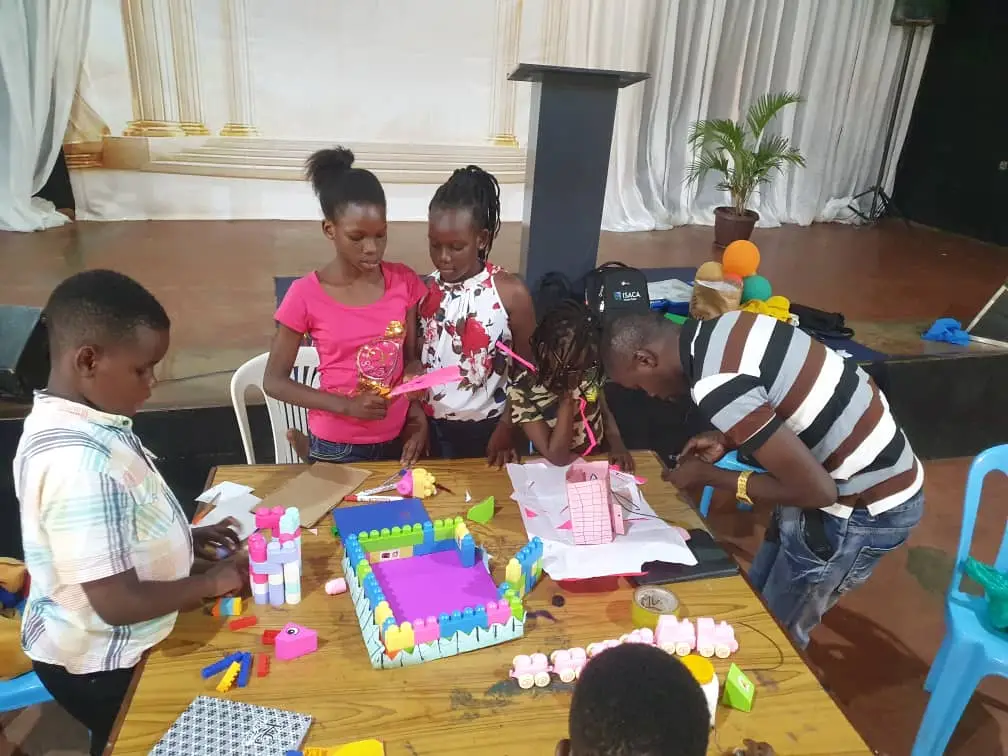
Through Robokids Africa, learners are introduced to robotics and coding using simple, affordable, and context-appropriate tools. They work in teams, build models, test ideas, and learn by doing. Coding is no longer only a definition on a chalkboard. It becomes something learners can use to control, create, and solve.
Making STEM practical in low-resource classrooms
The model also works with teachers. Instead of creating a separate technology space that sits outside the school day, Robokids Africa supports teachers to bring computational thinking and design challenges into existing classroom schedules.
Teachers gain practical skills and confidence, while learners experience STEM as something they can touch, build, and lead.
Early signs of change
The case study shows early signs of change. Learners with no previous exposure to computers are now writing basic scripts, assembling robotic models, and working through programming concepts with growing confidence.
Some learners have also taken on student leadership roles as “Robo-Captains,” helping mentor their peers, manage kits, and troubleshoot challenges during group work.
Alumni leadership beyond the Fellowship
This is the Fellowship story beyond the Fellowship.
At Teach For Uganda, the two-year leadership journey begins in underserved public primary schools. Fellows teach, listen, learn from communities, and come face to face with the barriers affecting children’s learning. For many Alumni, that experience continues to shape how they lead.
Some remain in classrooms and school leadership. Others move into education policy, public service, nonprofit leadership, research, entrepreneurship, community development, and innovation. Anthony’s journey is one example of how a classroom placement can grow into a practical solution that continues to serve learners and teachers beyond the Fellowship.
As Teach For Uganda celebrates 10 years of impact, this story speaks to the kind of leadership the Fellowship was built to grow: leadership that is close to the realities of children, honest about the gaps, and bold enough to build from what is available.
Read the full case study to learn how Robokids Africa is helping learners move from memorizing technology to creating with it.
Be part of the movement
Support the Give a Book Campaign and help place books in the hands of learners in underserved public primary schools. A child cannot learn to read without something to read.
Apply or refer a recent female STEM graduate to the Teach For Uganda STEM Fellowship and help grow the next generation of women leaders in STEM.